
All the Versions of Me
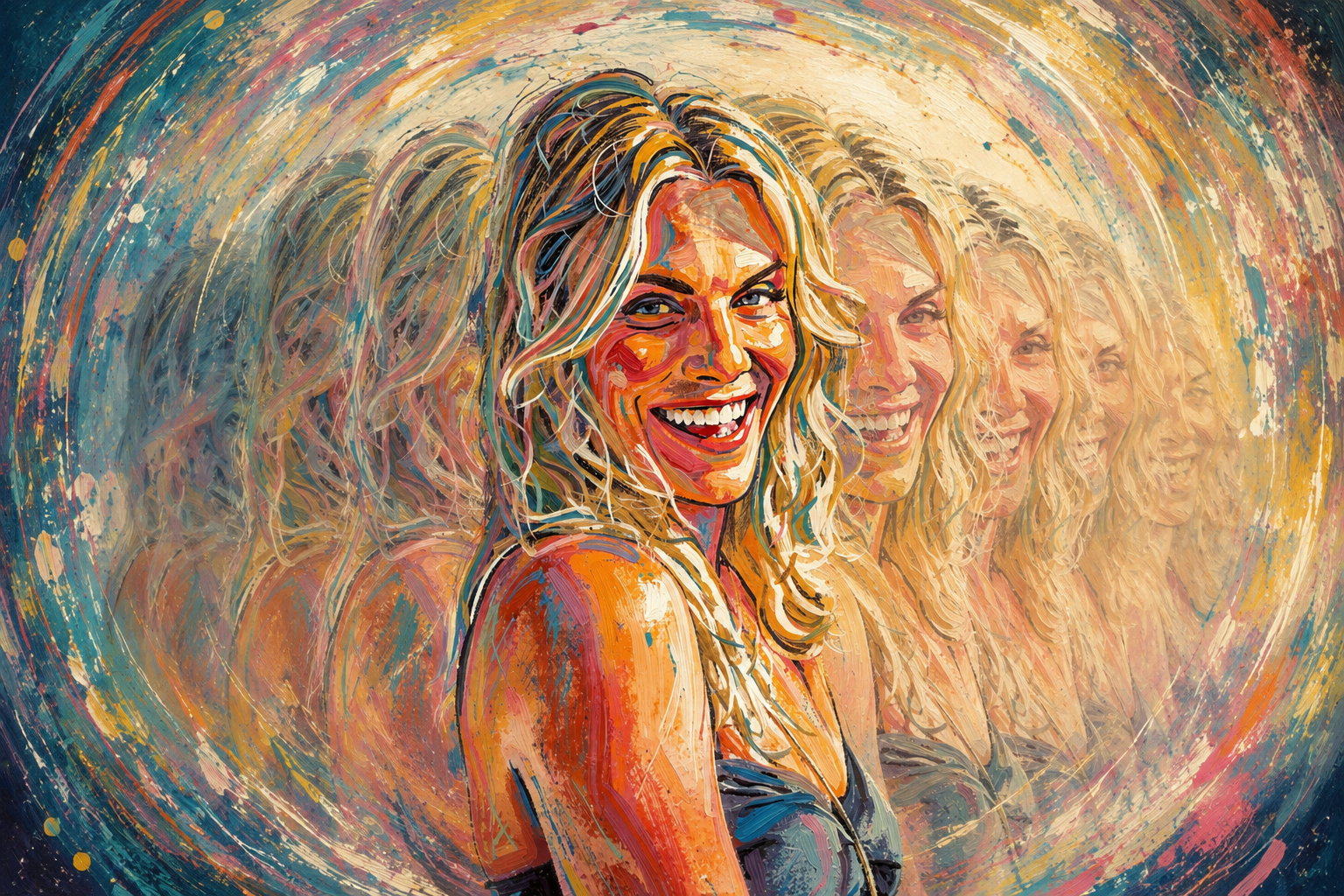
I have been thinking a lot lately about how many versions of myself I carry around.
Not two. Hundreds, probably.
There is the woman who doesn’t need anyone, and the little girl who still hopes someone will show up. There is the person who has become quite comfortable with being alone, and the person who sometimes wonders what it would feel like to have a deep sense of belonging.
There is also the woman who has learned, repeatedly and sometimes brutally, that people can disappoint you. And yet there is still this remarkably earnest part of me that believes them when they say, I’m here.
You would think she would have learned by now.
I’m glad she hasn’t.
That’s the paradox.
I didn’t become a loner because I decided one day that I preferred my own company. Life trained me for it.
There were years when the people who were supposed to be safe weren’t. There were times without money, food, or a home. Times I was hurt, discarded, frightened, and left to figure out what came next.
So I did. Again and again.
Eventually, you become very good at it. You learn how to soothe yourself because no one else is coming to do it. You make decisions without calling someone first and climb out of holes without a hand reaching down. You learn how to celebrate yourself, console yourself, protect yourself, motivate yourself, and, when necessary, begin again by yourself.
We all have to learn some version of this, I think. Some of us just get more practice.
And all that practice gave me something.
I am extraordinarily resourceful.
Nobody handed me the Cliff Notes for life, so I learned how to write my own. I’m still writing them.
I can start a business without someone showing me how. I can walk into something I don’t understand and figure it out. I can change course, improvise, find the information, make the phone call, solve the problem, and keep moving.
Those Cliff Notes were expensive. I paid for them in experience.
Maybe that’s why I’m not particularly interested in handing them over every time someone wants to “pick my brain.”
Write your own damn Cliff Notes.
This kind of independence has prepared me incredibly well for a world that increasingly feels chaotic. I’m not particularly attached to a country, and I’m less attached to possessions than I once was. Some of my life is sitting in storage, and I’ve discovered I can live quite happily without knowing exactly what’s in there.

I still dream about having a home. A real one. A place that feels rooted and mine. But I no longer believe I need one in order to know who I am.
That may be one of the strangest gifts of losing things. Eventually, you learn the difference between wanting something and requiring it for your survival.
I can deeply want a person, a place, a home, or a life without believing I will cease to exist if I lose it. I know now that if the architecture of my life collapsed tomorrow, I would be devastated. And then, eventually, I would build something else.
Somewhere along the way, I stopped believing that the end of a life I knew meant the end of me.
There is freedom in that. There is also a cost.
I see people my age who still vacation with their families. People who have mothers they call, sisters who know the entire history without needing the backstory, and friends who have been around long enough to remember several versions of one another.
I can intellectually understand that kind of support. But I don’t know what it feels like to move through the world with the fundamental assumption that there are people behind you.
My assumption has always been that I had better be able to stand on my own.
And I can.
I also know that hyper-independence isn’t necessarily the goal. I would actually like interdependence. I just don’t think the opportunity has presented itself in a way that has made me willing to stop carrying my own weight.
I was married for a long time. One of the things I learned from the end of that marriage was that I had put too many eggs in someone else’s basket.
I won’t do that again.
That doesn’t mean I don’t want partnership. I do. It means my identity will never again be attached to a man. I can love someone, choose someone, build with someone, compromise with someone, and sometimes lean on someone without handing over the keys to myself.
I don’t want necessity mistaken for love.
I want to choose someone because I want them, not because I have constructed a life I cannot maintain without them. Healthy interdependence must exist somewhere between those two things.
I’m still figuring that part out.
And despite everything I know, despite everything I have experienced, I remain strangely hopeful about people.
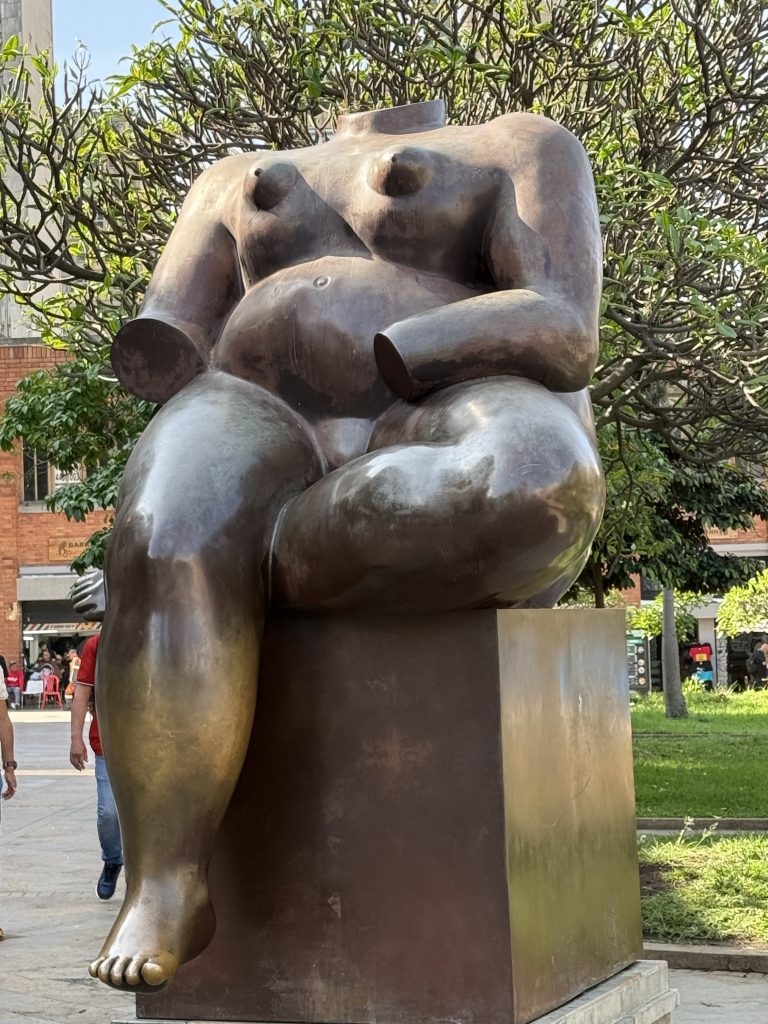
There is still a little girl in me, and she’s gotten me into trouble. She believes enthusiasm. She gets excited by connection and sees possibility. She sometimes gives people more credit than they have earned because she wants so badly to believe that this time the thing in front of her might be exactly what it appears to be.
Meanwhile, the grown woman is standing behind her thinking, Have we learned nothing?
Apparently not.
But I don’t want to get rid of her. In fact, at this stage of my life, I think I want more of her.
Not necessarily the part who believes everybody. We are working on that.
I want the part who still feels wonder.
Because after everything I have done and everything I have chased, wonder is increasingly what I want.
I have had wild experiences. I have traveled. I have experimented. I have started businesses. I have pushed myself into rooms and situations that frightened me. I have blown up my life and rebuilt it. I have gone looking for answers in plenty of places.
Now?
I find myself craving wholesome, earnest, peaceful, loving, and happy. I may still get wild. I hope I do. But simple things have become enormously appealing to me, too.
Maybe that is why I started writing stories for children.
Where the Quiet Things Grow came from a part of me I don’t completely understand yet. I thought I was writing little stories about ants and flowers and seeds and creatures trying to find their way through the world.
But perhaps I was also creating somewhere for that little girl to live, a place where wonder isn’t embarrassing, earnestness isn’t naïve, being small doesn’t mean being powerless, and the quiet things matter.
I need that place too.
There is another part of my life I am beginning to appreciate: it has given me room.
At this age, many people are raising children, launching them into adulthood, caring for parents, or moving between both responsibilities at once. My life took a very different shape. Some of that was choice, and some of it wasn’t.
But the result is that I have an unusual amount of freedom to create.
Sometimes I wonder whether what once looked like empty space was also making space for something else: the time to write and report, to build things, and to make stories about ants and flowers and strange little creatures that might mean something to someone I will never meet.
I don’t believe anyone has to be productive to be worthy of being here. But I want to use that freedom wisely.
Perhaps that is part of why I put so much pressure on myself to make work that matters.
I don’t have children to whom I will hand some conventional version of a legacy. But I can make things. I can leave behind stories, ideas, questions, and work that might continue traveling after I’m gone. I think that may be another way of passing something on.
None of this means I am suddenly becoming some wide-eyed person floating through life believing everything is beautiful.
Quite the opposite.
I am capable of being cynical and hopeful within the same hour, of feeling lonely while genuinely not wanting company, and of wanting to be known while fiercely protecting my privacy. I want softness despite possessing an enormous capacity for hardness. And I can desperately want someone to show up for me while knowing that when they do, there is a very good chance I will say, It’s okay. I’ve got it.
I usually do.
Maybe that’s what I’m beginning to understand about paradoxes: they aren’t necessarily problems waiting to be solved.
I’ve spent a lot of my life examining myself, pulling things apart and trying to understand why I react the way I do, why certain patterns repeat, what belongs to the past, what belongs to the present, and what I might do differently next time.
There is value in that. But there is also a point at which I have to stop treating myself like a puzzle whose pieces will eventually click together into one coherent picture.
They may never.
Perhaps there isn’t one Meggen underneath all the others waiting to be uncovered. I may simply be all of them at once: the survivor and the little girl, the loner who also longs to be deeply known, the skeptic who still believes, the woman who has learned not to expect rescue and the child who can look at something beautiful and still think, Maybe.
I can carry an extraordinary amount alone and still sometimes wish, more than I like admitting, that I didn’t have to.
I don’t know how to reconcile those things.
I’m not sure I should.
What I do know is that I don’t want surviving the world to cost me my ability to be enchanted by it.
I’ve already paid enough.
So perhaps the work now isn’t making all these versions of myself agree. It’s learning how to let them live together without asking one of them to win.
The woman I am now can decide who gets close. She can be discerning without becoming cynical, independent without pretending she never wants someone else to carry something for a while, and protective without extinguishing the part of her that still believes in possibility.
As for that ridiculous, hopeful little girl?
I think I’ll let her keep looking for magic.