


Chronic Pain Doesn’t Always Start Where It Hurts. Fascia May Explain Why
If you’ve spent any amount of time living life, chances are you’ve accumulated some aches and pains along the way. For millions of Americans, however, pain isn’t an occasional nuisance. According to the Centers for Disease Control and Prevention, roughly 60 million U.S. adults—nearly one in four—live with chronic pain, defined as pain that lasts or recurs for more than three months.
For decades, the response to everyday pain was often relatively straightforward: identify what hurt, whether it was the back, hip, knee, muscle, or joint, and try to quiet it. That might mean reaching for a nonsteroidal anti-inflammatory drug (NSAID), applying a topical pain reliever, or seeking treatment for the part of the body that seemed to be causing the problem.
That’s beginning to change. For all of social media’s shortcomings, it has also given millions of people access to physicians, physical therapists, trainers, and other experts talking about mobility, strength, recovery, nervous-system regulation, and parts of the body most people rarely thought about before. Fascia is one of them.
At the same time, our understanding of the body itself is becoming more nuanced. As I’ve previously reported, men and women don’t necessarily experience aging in the same way, and researchers are paying greater attention to how interconnected systems—including the nervous, fascial, and lymphatic systems—affect movement, recovery, and the way we feel as we age.
Fascia isn’t a new discovery, nor is it a catchall explanation for chronic pain.
But growing research into its role in sensation, movement, and pain signaling raises an intriguing question: Could fascia be one of the missing pieces in understanding why some pain persists—and what we can do about it?
What Is The Connection Between Fascia And Chronic Pain?

For years, fascia was largely treated as the body’s wrapping material—the connective tissue surrounding and supporting muscles, bones, nerves, blood vessels, and organs.
But researchers now understand that fascia is highly innervated and capable of participating in pain signaling itself. A 2025 review published in Frontiers in Pain Research examined how inflammation, fibrosis, densification, impaired tissue sliding, and changes in sensory signaling may contribute to pain. The authors caution that the evidence is still evolving and that fascia should be considered within a broader, multifactorial model of pain.
“Fascia is living connective tissue with extensive sensory and autonomic innervation,” says Dr. Sean Goddard, DO, an osteopathic physician who specializes in regenerative medicine and the founder of The Osteopathic Center. “This means it can detect mechanical strain, inflammation and injury—and can itself generate pain.”
Part of the emerging picture involves how fascial layers move against one another.
Goddard explains that what people commonly describe as fascia feeling “tight” or “stuck” can reflect several different processes, including impaired sliding between tissue layers, protective muscle tension, inflammation, fibrosis, changes in the extracellular matrix, or altered fluid behavior.
One potential contributor is hyaluronan, a lubricating molecule found between fascial tissue layers. Changes in its distribution or behavior may increase friction, interfere with tissue glide, and contribute to stiffness or pain.
“‘Dehydrated fascia’ is less medically precise; systemic dehydration alone is unlikely to explain most fascial pain.”
Dr. Sean Goddard
Garry Lineham, co-founder of Human Garage and creator of Fascial Maneuvers, approaches the question from a different vantage point.
After spending approximately two decades searching for solutions to his own chronic pain, Lineham began working directly with others experiencing pain and restricted movement. He eventually developed Fascial Maneuvers, a movement-and-breathwork approach intended to improve mobility and relieve tension.
“Pain almost never starts where you feel it,” Lineham says. “A knee problem can come from the hip, a shoulder problem from the jaw, a headache from the jaw or the feet.”
He believes practitioners sometimes focus too narrowly on the body part a person identifies as painful, without considering how movement restrictions elsewhere might contribute.
Lineham also interprets sensations of stuck or tight fascia primarily through changes in tissue hydration and glide. He believes Fascial Maneuvers can help restore that movement. Although fascial lubrication and sliding are legitimate areas of research, the specific claim that his method rehydrates fascia has not been established as a general physiological explanation for symptom relief.
And fascia doesn’t explain every stubborn knee, aching back, or painful shoulder. Chronic pain can involve muscles, joints, nerves, connective tissue, inflammation, previous injuries, nervous-system sensitization, psychological and social factors, or several of these at once.
What emerging fascia research adds is another potential piece of that puzzle: the connective tissue surrounding and linking those structures may be an active participant in pain rather than simply the material around them.
Why Does Your Body Feel Stiff When You’re In Pain?

Pain doesn’t just hurt. It can change the way the body moves.
When the nervous system senses pain or instability, one possible response is to increase muscle tension and co-contraction—activating muscles around an area simultaneously to create stability.
Goddard describes this as a “stiffening strategy.”
“When fascia, or the ligaments, capsule and other connective tissues integrated with it is injured enough to impair stability or load transfer, the nervous system may increase muscle tension and co-contraction to protect the region,” he explains.
In the short term, that protective response can be useful. But when it persists, increased muscle tension can change movement patterns and how forces are distributed through the body. Movement may decrease, other areas may begin compensating, and the cycle of stiffness, altered movement, and pain can reinforce itself.
Recent research into chronic low-back pain offers a similar proposed model. A 2026 paper describes how some people with persistent low-back pain may adopt a stabilization strategy characterized by increased co-contraction, reduced movement variability, and what researchers call “functional rigidity.” The authors emphasize that this is a proposed model rather than an explanation for every case of chronic low-back pain.

Lineham says he sees compensatory patterns frequently in his work. His concern is that people may focus on the painful area without recognizing how movement elsewhere has changed.
“The mistake—and even good practitioners make it—is treating the spot someone points to instead of asking where the restriction actually began,” he says.
Can A Practitioner Actually Feel Stuck Fascia?
This is one of the more complicated questions surrounding fascial treatment.
A practitioner may assess tenderness, tissue texture, movement, stability, and the way someone responds to pressure. But that doesn’t mean every sensation beneath their hands corresponds to a specific, identifiable fascial abnormality.
“There is currently no universally accepted clinical consensus or standardized diagnostic test for identifying fascial dysfunction,” Goddard explains.
He says an experienced provider may detect certain tissue changes through palpation and movement assessment, but those findings need to be considered alongside muscular, joint, neurological, and systemic causes.
Even a skilled clinician, he cautions, is unlikely to identify every fascial dysfunction through touch alone.
That’s an important distinction for consumers navigating a growing marketplace of treatments promising to identify and release hidden restrictions. A practitioner may recognize useful movement patterns or areas of sensitivity without being able to prove that a particular fascial layer is the cause of someone’s symptoms.
How Stress And Trauma Affect Fascia And Pain

Physical trauma can alter fascia through inflammation, scarring, and changes in how the body loads an injured area. Psychological stress can influence the body differently, affecting autonomic activity, breathing, muscle tension, and pain sensitivity.
Goddard says both can become part of persistent pain patterns.
Lineham describes the difference more viscerally.
“An old physical injury tends to create a local restriction—the body braces one specific area and never fully releases it, even after the injury heals,” he says.
Chronic stress and emotional trauma, in his experience, can produce something more widespread: a generalized guardedness that shows up in posture, breathing, and movement patterns.
His description is compelling because it captures something many people recognize intuitively. Stress can change how we hold ourselves. We tighten our shoulders, clench our jaws, breathe more shallowly, or become less willing to move freely.
But what does that mean physiologically?
A 2026 review in Frontiers in Pain Research examined what the authors describe as a “stress-fascia-pain axis,” bringing together research involving fascial biomechanics, autonomic and neuroendocrine responses to stress, inflammation, and altered pain processing.
The evidence isn’t equally strong for every proposed connection. Some local inflammatory and sensory mechanisms are better established, while broader explanations involving stress, fascia, and persistent pain remain under investigation.
Goddard makes a similar distinction.
“Osteopathic medicine recognizes somatoemotional patterns—the expression of lived or emotional experience through posture, guarding, respiration and bodily tension,” he explains.
But he cautions that this “does not necessarily mean emotions are literally stored in fascia.”
Some people nevertheless report memories or emotionally significant experiences surfacing during hands-on tissue work. Those experiences may be meaningful without establishing that a specific memory was physically contained within connective tissue.
Why Breathwork May Matter
For Lineham, breathing is central to Fascial Maneuvers, not simply something added to make the experience more relaxing.
“That’s why breath is as central to this work as touch—you can manually work on tissue all day, but if the nervous system is still signaling danger, the body will simply re-tighten afterward.”
Garry Lineham
His explanation reflects his working model of how protective tension and the nervous system interact.
Breathing can influence autonomic activity, attention, and muscle tension, although that doesn’t establish that any particular breathing technique physically releases a specific fascial restriction.
That doesn’t mean every painful or tense body is carrying unresolved emotional trauma. Nor does it mean someone can simply breathe away a complicated medical problem.
It means that the nervous system, the tissues it regulates, and the way a person experiences pain are deeply interconnected—and that treating the painful body part in isolation may not always address the full picture.
Can Surgery And Scar Tissue Affect Fascia?

Surgery doesn’t only leave a scar on the skin.
“Surgery disrupts multiple layers of innervated connective tissue,” Goddard says.
Fascia participates in wound repair, and healing may leave fibrosis, adhesions, or changes in tissue glide that affect movement and sensation long after an incision closes.
A 2026 review of post-surgical fascial remodeling examines how fibro-inflammatory processes and collagen deposition can contribute to stiffness and changes in connective tissue following surgery.
Lineham says he has observed restrictions around older surgical scars that appear to influence movement well beyond the immediate area.
“A surgical scar can look completely healed on the surface and still be pulling on the fascial lines running through and around it years later—I’ve seen this affect posture, mobility, and pain in areas that seem unrelated to the original surgery,” he says.
Can Old Scar Tissue Be Released?
This is where the language surrounding fascia can become misleading.
The idea that scar tissue must be aggressively broken apart suggests a relatively simple mechanical problem. But biological remodeling is more complicated.
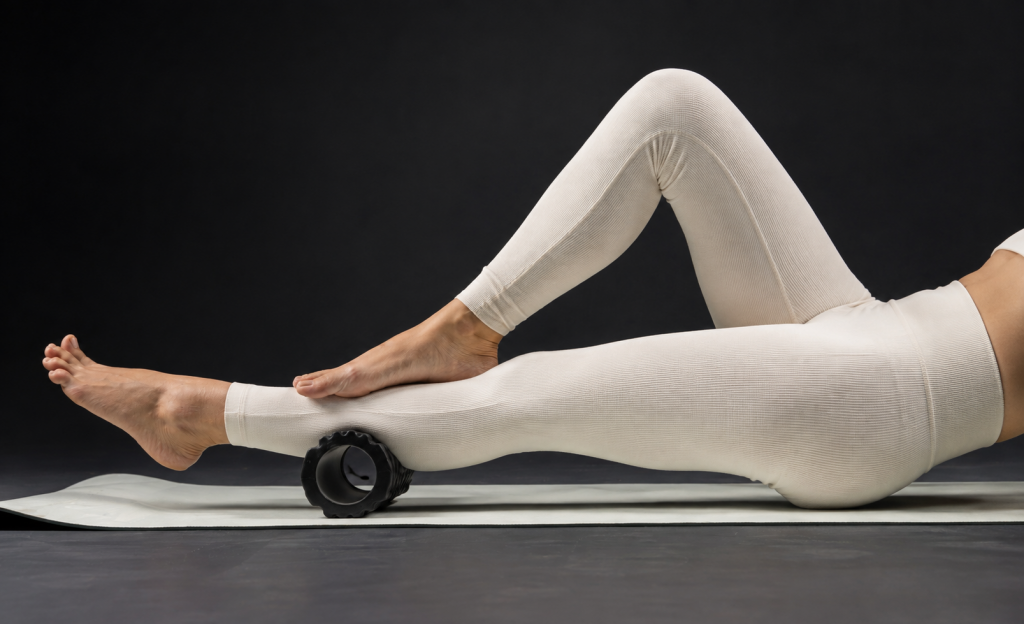
“Mature scar tissue is not simply ‘broken up’ with hands, instruments or foam rollers; meaningful change occurs through gradual biological remodeling and neuromuscular adaptation,” Goddard explains.
Progressive movement, rehabilitation, and appropriate manual treatment may help improve mobility, tissue behavior, and sensitivity.
Lineham also emphasizes the boundaries of self-treatment.
“But there are real boundaries here: anyone with an unstable injury, an active medical condition, or a recent surgery needs medical guidance before doing this work,” he says.
That matters particularly for people recovering from abdominal surgery, orthopedic procedures, or other operations involving multiple layers of connective tissue.
A healed incision does not necessarily mean the tissues beneath it are moving exactly as they did before. But persistent pain following surgery also deserves a proper medical assessment rather than an automatic assumption that fascia or scar adhesions are responsible.
Is Fascia Part Of A Larger Communication System In The Body?
Fascia doesn’t exist in isolation.
It forms a three-dimensional connective-tissue continuum throughout the body, interacting with muscles, nerves, blood vessels, lymphatics, and immune cells.
It’s far more than a passive structural framework. A systematic review of fascial innervation found evidence of sensory nerve fibers across different fascial tissues, although their distribution and density vary by anatomical location.
Those nerve fibers help explain why fascia may contribute to our perception of pressure, movement, and pain. Rather than simply holding structures in place, connective tissue participates in the body’s ongoing exchange of sensory information.
The different layers of fascia also serve distinct functions. Superficial fascia beneath the skin contains nerves, blood vessels, and lymphatic structures, while deeper fascia surrounds and separates muscles and helps transmit mechanical forces. Connective tissue extends into muscles and around organs, creating anatomical relationships throughout the body.
But interconnected doesn’t mean interchangeable. A restriction in one area doesn’t automatically explain pain somewhere else, nor does the presence of nerve fibers mean fascia operates as an independent communication network.
What makes fascia interesting is precisely this relationship between structure and sensation: it helps organize how the body moves while also contributing information about what the body is experiencing.
Could Fascia Help Explain Acupuncture Meridians?

Traditional Chinese medicine has long described meridians as pathways through which qi moves. Ayurvedic traditions describe nadis and prana. These systems developed long before modern anatomical research began examining fascia in its current form.
Lineham believes fascia may offer a physical explanation for some of those traditional descriptions.
“I’ve always come back to one question: what actually carries a meridian? What’s the physical material behind it? I believe the answer is fascia,” he says.
“I don’t think those older systems were wrong—I think they were describing something real through direct experience, long before we had the language or instruments to explain it,” he says.
That is Lineham’s interpretation, not an established anatomical finding. In particular, fascia has not been demonstrated to transmit information in the same way that synapses transmit signals between neurons.
Still, the question itself has attracted scientific attention.
In 2002, researchers Helene Langevin and Jason Yandow published a paper examining the relationship between acupuncture points, meridians, and connective-tissue planes. They proposed that connective-tissue anatomy might help explain certain relationships described by traditional acupuncture maps.
It was a hypothesis, not proof that fascia and meridians are anatomically identical.
Goddard, who is trained in medical acupuncture as well as osteopathic medicine, finds the comparison intriguing.
“As an osteopathic physician trained in acupuncture, I see scientifically intriguing parallels with acupuncture meridians and nadis,” he says.
He also describes patients reporting sensations of energy moving through their bodies during osteopathic cranial or fascial work.
“These subjective experiences may possibly correlate, in part, with the patterns described in acupuncture meridians or nadis, or with changes in autonomic activity, interoception, breathing, attention and tissue sensation,” he explains.
But he is equally clear about the scientific boundary: “At present, however, science has not established that meridians or nadis are anatomically identical to fascial, neural or vascular pathways.”
Can You Really “Release” Fascia—And What Actually Helps?

People describe feeling something let go during massage, stretching, foam rolling, bodywork, or other movement practices. Sometimes the change is immediate: less tension, easier movement, or a sense of relief.
“The word ‘release’ gets used constantly, but a real release isn’t cracking something or forcing it loose—it’s giving the tissue permission to let go on its own terms,” Lineham says.
Goddard offers a physiological explanation that doesn’t require imagining a piece of tissue suddenly snapping free.
“An immediate ‘release’ probably represents a rapid neuromechanical and sensory change rather than collagen or scar tissue being physically torn apart,” he says.
Manual pressure or movement may temporarily influence muscle tone, protective guarding, sensory signaling, pain sensitivity, circulation, tissue-fluid distribution, and the ability of tissue layers to move relative to one another.
“Changes in breathing, attention, autonomic activity and the nervous system’s interpretation of threat may also contribute to the person’s experience of reduced tension or improved movement,” Goddard explains.
What Actually Helps Fascia And Mobility?

For all the specialized treatments, tools, and terminology surrounding fascia, both men return to surprisingly straightforward practices.
“Regular movement, strength training, mobility work and adequate recovery provide the foundation for healthy connective-tissue function,” Goddard says.
Manual therapy, he adds, may be useful as an adjunct rather than a replacement for proper diagnosis or rehabilitation.
Lineham places particular emphasis on consistency.
“For everyday self-care, movement and breathwork make the biggest difference—consistency matters more than intensity,” he says.
Regular walking, appropriately scaled strength training, comfortable mobility work, sufficient recovery, and paying attention to how the body responds can all be part of a sensible approach.
The appropriate starting point will vary, particularly for someone managing chronic pain, recovering from surgery, or living with an underlying medical condition.
And there are limits to what self-care can accomplish.
Lineham advises stopping self-treatment and seeking medical evaluation when pain is sharp, sudden, worsening, or accompanied by symptoms such as numbness, weakness, or swelling.
Goddard recommends medical assessment when pain persists despite appropriate noninvasive measures, repeatedly worsens, or interferes with normal function. Weakness, numbness, fever, major trauma, unexplained weight loss, bowel or bladder changes, and significant night pain are additional warning signs.
Perhaps that’s where the conversation about fascia becomes most useful.
Understanding more about how the body moves, guards, adapts, and responds to pain doesn’t mean every problem can—or should—be handled alone.
But it does give us a larger role in caring for the bodies we inhabit.
We don’t necessarily need to outsource every ache or stiffness to someone else, nor do we need another treatment promising to “fix” us. Sometimes medical care is necessary. Sometimes rehabilitation is. And sometimes the things we can do ourselves—moving, building strength, recovering, breathing, and paying attention—are part of the answer too.
△ △ △
Author’s Note: This article was originally published in Forbes in September 2026 and has been expanded to include additional commentary from Garry Lineham, co-founder of Human Garage, and osteopathic physician, Dr. Sean Goddard, DO.