

I Don’t Hate the Game. I Hate What the Game Requires.
I recently posted something on Instagram about authority and expertise. One of my observations was, “I don’t hate the player. I hate the game.” But the more I thought about it, the more I realized that’s not entirely true. I don’t even hate the game.
I hate what the game requires.
I’m 51 years old, and I’m working harder than I’ve ever worked in my life. Which is particularly ironic considering that the whole point of working this hard is to eventually create a life where I don’t have to.
I have client work that pays my bills. I write for Forbes. I’m building my own website, writing and illustrating children’s books, developing animations, and learning the publishing business.

Some days I’m writing an article. Other days I’m illustrating a hardcover book, editing an animation, or attempting to understand why a perfectly functional WordPress plugin has suddenly decided to become a problem.
Often, I’m doing several of these things in the same afternoon.
Then, somewhere in the middle of all this, I remember that I have to market everything. And sell it.
Oh, fuck.
Of course, somebody has always had to sell the thing. Making something good has never guaranteed that anyone would buy it, or even know it existed. Writers needed publishers. Musicians needed record labels and promoters. Artists needed galleries, dealers, or someone willing to introduce their work to the right people.
There was an entire infrastructure around getting creative work into the marketplace, and people deciding which work deserved a place in it.
Now, much of that has changed.
I can write, illustrate, and publish my own children’s book without convincing an editor that it’s commercially viable. I can create an animation and put it on YouTube without persuading a television network to give me airtime. I can publish an essay on my own website without waiting for someone to decide whether it’s worth printing.
That’s extraordinary. It’s also a tremendous amount of work.
Because the moment I finish creating something, another job begins.
Distribution.
That job comes with an entirely different set of skills, expectations, and demands.
△ △ △

I remember watching writers build substantial social media followings a decade ago and wondering whether this was going to become an expectation for the rest of us.
Turns out, yes.
The old gatekeepers haven’t disappeared. Traditional publishers, television networks, record labels, and established media companies still decide who gets access to their audiences.
But now we have alternatives.
Anyone can publish, make a video, launch a product, or open a digital storefront. We’ve removed an enormous number of barriers to entry.
What we haven’t removed is the problem of getting anyone to notice.
We found a way around the gatekeepers. But we didn’t get rid of the gate.
Meggen Harris
In some ways, the gate has become harder to see.
A publisher might reject your manuscript. A network might pass on your show. At least you knew someone had made a decision.
Now you can publish something and watch it disappear into the digital ether without ever understanding why.
Was the headline wrong? The thumbnail? The timing? Did the algorithm decide your work wasn’t interesting enough to show anyone?

Who knows?
So, we begin studying the mechanics of visibility.
Engagement. Reach. Retention. Search rankings. Watch time. Subscriber counts. Click-through rates.
I don’t particularly enjoy social media. Never have.
But I understand its advantages. I can look at a collaborative post with someone who has 50,000 or 100,000 followers and see what happens when my work reaches a much larger audience.
The math isn’t mysterious.
I don’t mind being in front of the camera occasionally.
The glitch occurs because I have a somewhat unfortunate personality trait: I don’t particularly like being told what to do, especially when the arrangement seems designed to benefit someone else more than it benefits me.
The rules keep changing, too.
Look at Substack. What began as an appealing way for writers to publish independently and build direct relationships with readers has developed its own ecosystem of rankings, subscriber counts, restacks, recommendations, and people teaching other people how to become successful on Substack.
The same thing happens on LinkedIn and Instagram.
People become known for knowing how to become known.
Which, when you think about it, is a pretty remarkable business model.
I’m not dismissing the skill involved. I’ve interviewed founders for Forbes who have leveraged their communities to launch successful businesses. Building an audience and turning that attention into a livelihood takes real expertise.
What interests me is how the ability to attract attention has become a valuable commodity in its own right, sometimes independent of the work that originally brought someone to a platform.
You can be an exceptional writer and terrible at social media. You can also be exceptional at social media and not particularly good at writing.
Sometimes, the second person gets the book deal.
Publishers are businesses. Someone with a million followers may look like a safer bet than an unknown writer with a brilliant manuscript. The writing itself can even be handled by a ghostwriter.
That’s not inherently wrong. But it says something about how the equation has changed.
Sometimes, the audience comes first. The product comes later.
There’s another reason I’m reluctant to build my entire livelihood around any one platform: the platforms themselves can change.
What works today might stop working tomorrow. A change in leadership, business priorities, algorithms, or policies can alter how your work reaches people. An account can be restricted. An audience you’ve spent years cultivating can suddenly become much harder to reach.
You can learn the rules, build a strategy, and play along. But you don’t own the playing field.
△ △ △
I’m busy writing the article, illustrating the book, making the animation.
I’m thinking about the work itself, not how I’m going to package myself doing the work so that people will eventually discover the work.
There’s a distinction between the craft and the craft of presenting the crafter crafting.
Increasingly, I’m expected to master both.
Videos about the thing. Posts about the thing. Behind-the-scenes glimpses of me making the thing. Captions, thumbnails, links, and analytics.
If people aren’t responding?
Perhaps I should make a different kind of video about the thing.
The game is keeping up with the fucking game.
Meggen Harris
Keep showing up. Keep participating. Keep producing. Keep responding.
Earlier this year, I wrote a Forbes article that went viral. It’s approaching 430,000 views and continues attracting thousands of readers every month.
Naturally, I’ve tried to understand why. I’ve written related pieces, studied search patterns, and applied everything I know about publishing online.
Nothing has come remotely close.
So much for cracking the code.
Recently, I spent about 12 weeks making a concerted effort to show up regularly on social media. Then I received some difficult news about my health, and suddenly producing content for Instagram wasn’t particularly high on my list of priorities.
The platform didn’t know that. Nor did it care. Why would it?
It’s a platform, not a person.
But that’s precisely the problem with a system that rewards constant participation. Life has an annoying habit of happening while we’re busy trying to maintain our visibility.
Meanwhile, I’m launching a YouTube channel for my children’s creative work. Which means creating Shorts, studying what works, and adjusting the strategy.
I know this will take months. I also know that every hour I spend making promotional content is an hour I’m not spending making the books and animations I’m trying to promote.
There are only so many hours in a day.
Apparently, none of these platforms have gotten that memo.
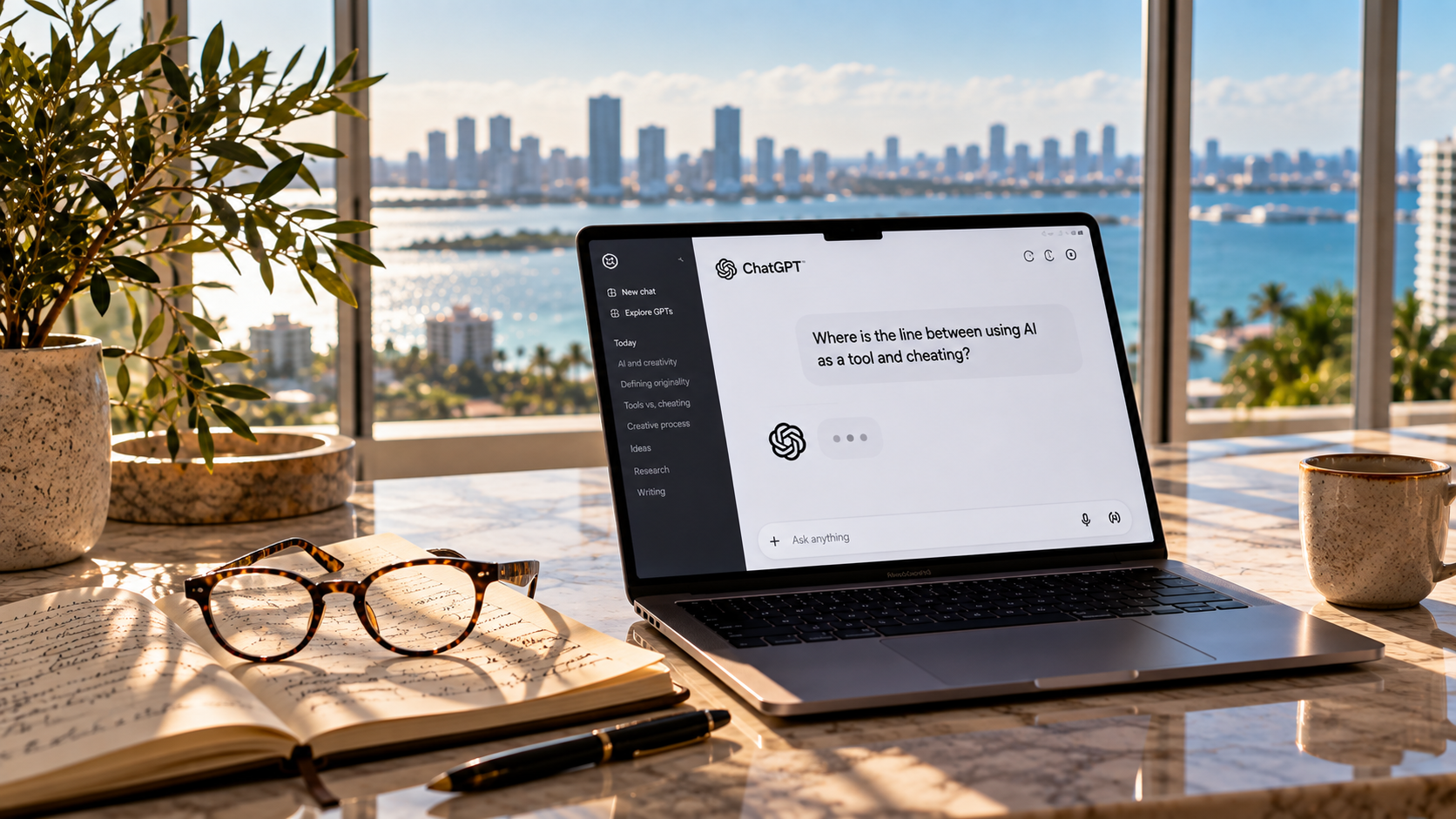
I keep experimenting with tools that promise to make everything easier. Artificial intelligence, scheduling applications, content creation software. Some are useful. Others require so much fiddling that I wonder whether I’ve acquired another employee who needs constant supervision.
I’d love to have someone come in, shoot a month’s worth of content, edit it, and take some of this off my plate.
But hiring someone comes with its own complications. Finding the right person, explaining what I’m building, learning enough to know whether they’re doing a good job, and deciding whether I can sustain the expense.
I’ve spent much of my career in sales and marketing, but promoting my own creative projects across these platforms is another matter entirely. I’m reluctant to hand over something I don’t understand myself.
Besides, I’m not in a position to throw money at a problem and hope it works out.
I’m bootstrapping this entire operation while relying on client work to keep the lights on. At 25, I might have thrown caution to the wind and figured I’d land on my feet. At 51, I’m making calculated decisions about which risks I can afford to take.
Of course, the math could be wrong. There could be variables I haven’t accounted for.
But right now, I’m the plate.
And the cook.
Apparently, I am also the dishwasher.
△ △ △

Money isn’t the only resource that matters.
There’s also community.
Family, friends, colleagues, and people genuinely excited about what you’re building. Some people launch something with an entire cheering section already assembled.
I’m more of a lone wolf.
Not because I was born that way. I’m social by nature. Circumstances and experience have simply made me more selective about where I put my energy.
When people discover I write for Forbes, conversations have a way of turning into pitches. I’ve had publicists cultivate what appeared to be friendships, only to discover the relationship was largely professional strategy.
I understand networking. But there’s a difference between genuine connection and cultivating someone because of what they might be able to do for you.
Visibility has its thorns.
Increasingly, the platforms don’t simply reward what we create. They reward how effectively we turn ourselves into part of the product.
I’ve spent much of my professional life selling things, and I’m quite good at it. Selling myself, however, is another matter.
There’s some old conditioning involved. Don’t talk about yourself. Don’t make too much of your accomplishments. Don’t draw unnecessary attention.
I’ve also learned that making your accomplishments visible can change the dynamics of relationships, sometimes in ways you don’t anticipate.
That hasn’t stopped me. In some ways, it’s fueled me.
But there’s a strange tension between knowing how to sell and feeling comfortable making yourself part of the pitch.
I understand the value of being visible. I also understand the costs, some of which have nothing to do with money.
I want people to find my work. I’m not trying to disappear, and I wouldn’t trade the freedom to publish independently for a return to a system where someone else decides whether I’m allowed to try.
But I don’t want to turn my entire life into promotional material, either.
My phone may give you a way to find me. It doesn’t give you unlimited access to me.
Maybe that’s a disadvantage in an economy built around personality.
Probably.
But I don’t want to spend my days creating a version of myself designed to satisfy an algorithm, either.
△ △ △
At this stage of my life, I’m working toward something fairly simple.
I want to spend my time creating projects that interest me and building things that can generate income without requiring my presence every single day.
I’m trying to create freedom by temporarily surrendering an extraordinary amount of it.
Whether that turns out to be a brilliant strategy or a spectacular mistake remains to be seen.
I don’t have the game figured out. I’m learning as I go, making calculated decisions with limited resources, and hoping there aren’t too many variables I’ve failed to account for.
Oddly enough, I’m fairly calm about it.
Maybe I shouldn’t be.
But I still have books to finish, animations to make, and stories I want to tell.
The thing I’m trying to sell is also the thing I need time to make.
△ △ △